CMU Biorobotics Lab · 2024
Search-and-Rescue Vehicles
GUI tools for autonomous search and rescue robot fleets
Built visualization, calibration, and operator-control tools for autonomous search-and-rescue robots operating in GPS-denied environments.
What I built
- C++/ROS autonomous behaviors
- Robot operator controls
- Sensor-data replay tooling
- Multi-camera visualization
- AprilTag-based map calibration
Robotics Researcher · CMU Biorobotics Lab · 2023–2024
problem
No structured way to review and replay
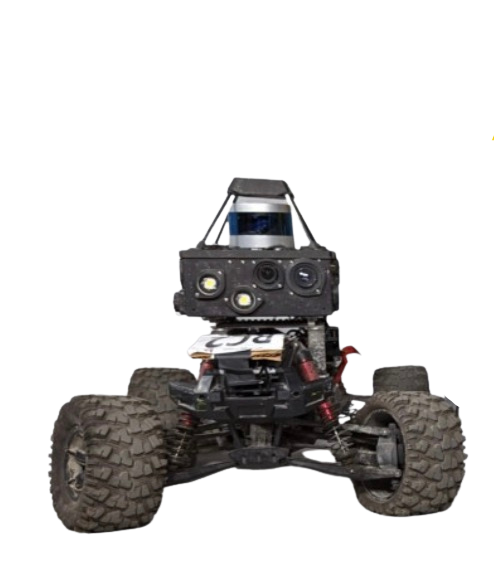
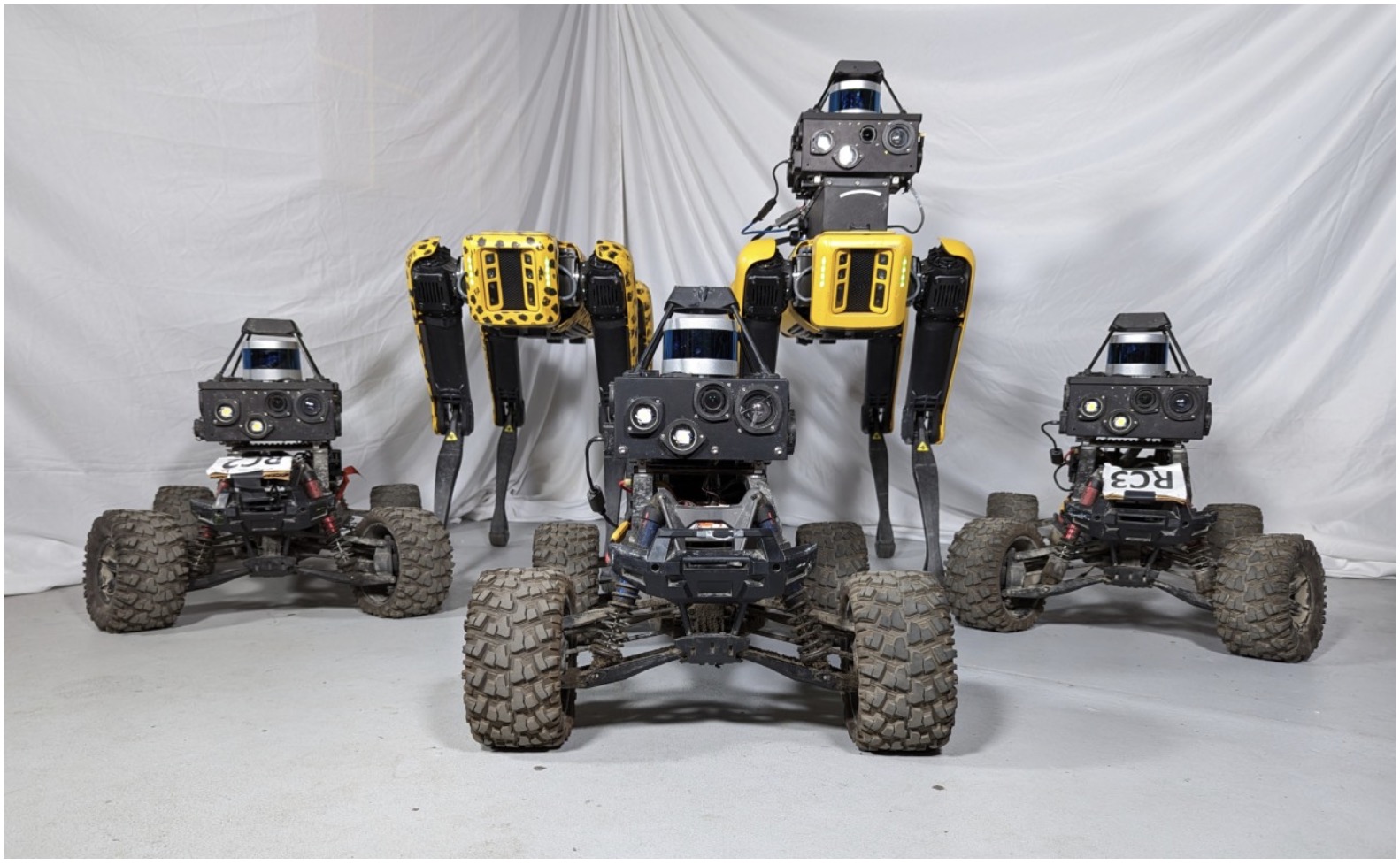
The CMU Biorobotics Lab operates a heterogeneous fleet of autonomous robots, wheeled and legged, designed to explore unknown structures and locate survivors in search and rescue scenarios. The core challenge was not the robots. It was the researchers validating them. LiDAR datasets across an entire fleet had no structured way to be reviewed, replayed, or verified. Synchronizing maps across multiple robots before a mission required 4 minutes of manual calibration per session. There was no way to rewind and inspect what a robot had seen 30 seconds ago.
contributions
Two GUI tools for data validation and operator control
A data visualization interface allowing researchers to rewind and replay LiDAR camera feeds across the full robot fleet. Established 10 robustness criteria validated across 10,000 scans. The replay feature, accessible directly from the control panel, allows operators to scrub back 30 seconds of footage from any robot during or after a mission, enabling rapid identification of dataset anomalies without re-running full sessions.
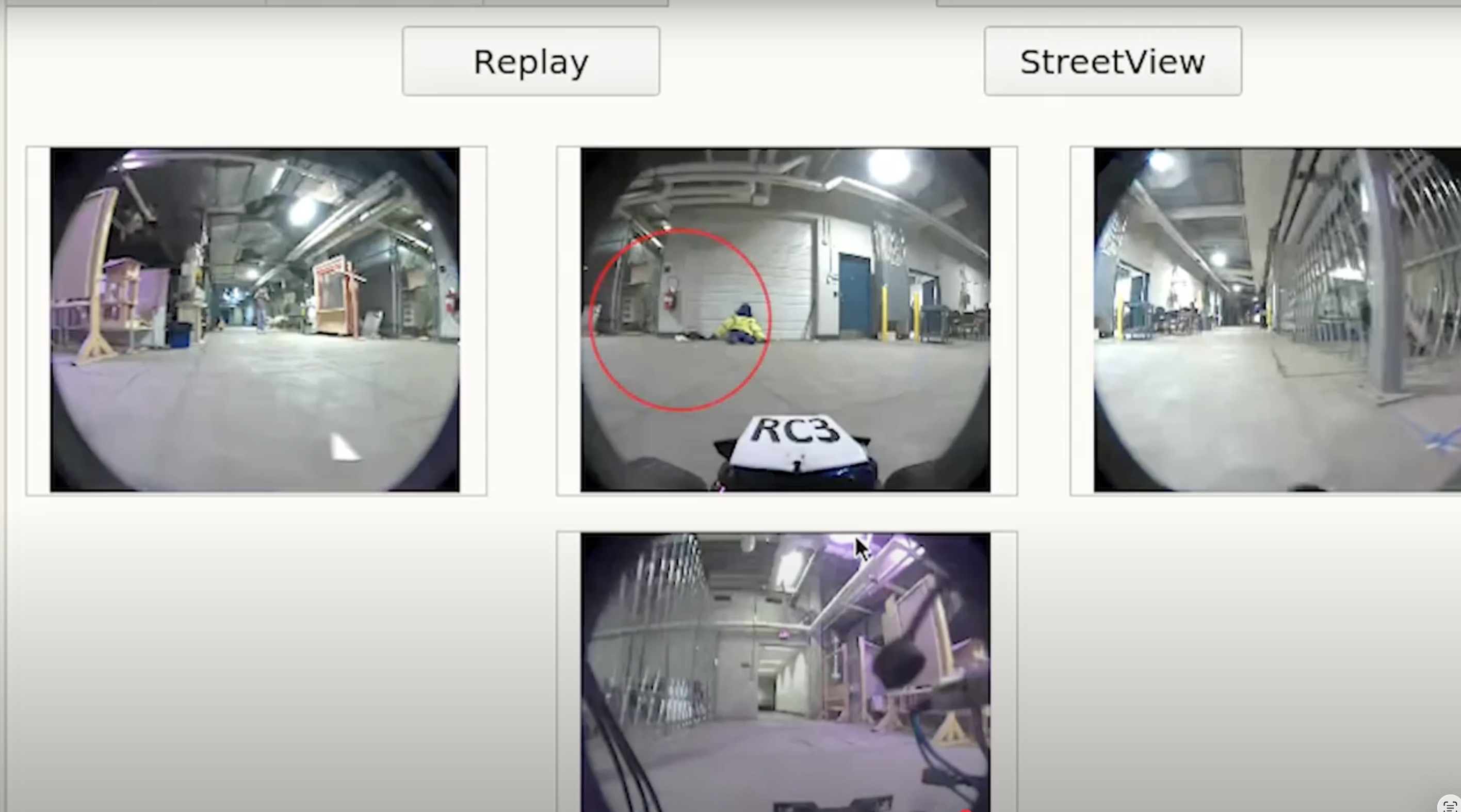
Multi-camera replay grid: RC3 fisheye feeds across three simultaneous viewpoints, victim circled in center frame.
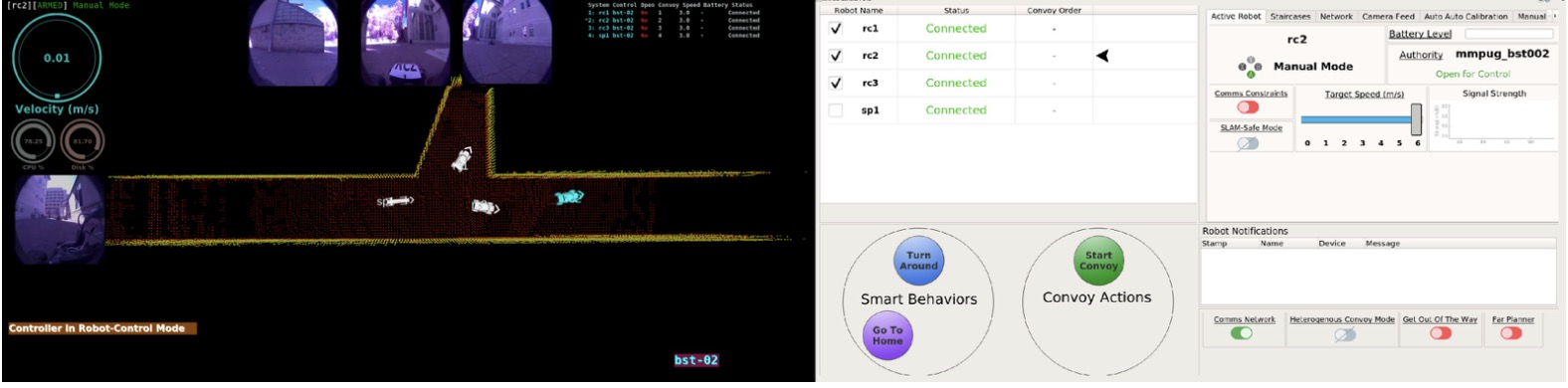
Mode switching interface for the operator control panel, handling transitions between Manual, Joystick, Waypoint, and Exploration autonomy modes. The GUI updates dynamically based on robot behavior tree feedback, surfacing only valid actions at each state. Battery level, signal strength, SLAM-safe mode, comms constraints, and target speed are all surfaced in a single persistent panel per robot.
calibration & testing
Faster setup, measured behavior
Before deployment, robots had to agree on a shared map frame, and the existing process required several minutes of manual alignment. I implemented an AprilTag-based calibration workflow that automatically aligned maps across robots, reducing setup from roughly four minutes to one.
I developed and tested autonomous behaviors across more than 100 simulation runs before deployment, evaluated against defined success conditions: goal completion, collision avoidance, localization stability, and recovery behavior. The resulting changes improved task success by roughly 25%.
outcome
Full autonomy hierarchy, accessible in the field
The tooling reduced setup time, made robot behavior easier to inspect, and gave operators clearer control over a fleet with multiple levels of autonomy. More importantly, it gave researchers faster feedback when autonomous systems behaved differently from what they expected.