Engineering · Summer 2024
Autonomous Tree Inventory System
Turning an autonomous tree-inventory prototype into a system farmers could independently operate
Moss had a working perception prototype: LiDAR, cameras, GPS, and IMU could scan 10–50 trees per second at 97% accuracy. But the system still ran from developer laptops and wasn't ready for farmers to use themselves.
I worked with growers and field workers to turn that prototype into a deployable system that fit their existing workflows and could operate reliably from an ATV.
Product Engineering Intern · Moss · Summer 2024
background
Inventory was still manual
Tree farmers struggle to maintain accurate inventory. The manual process left little traceability when numbers were wrong.
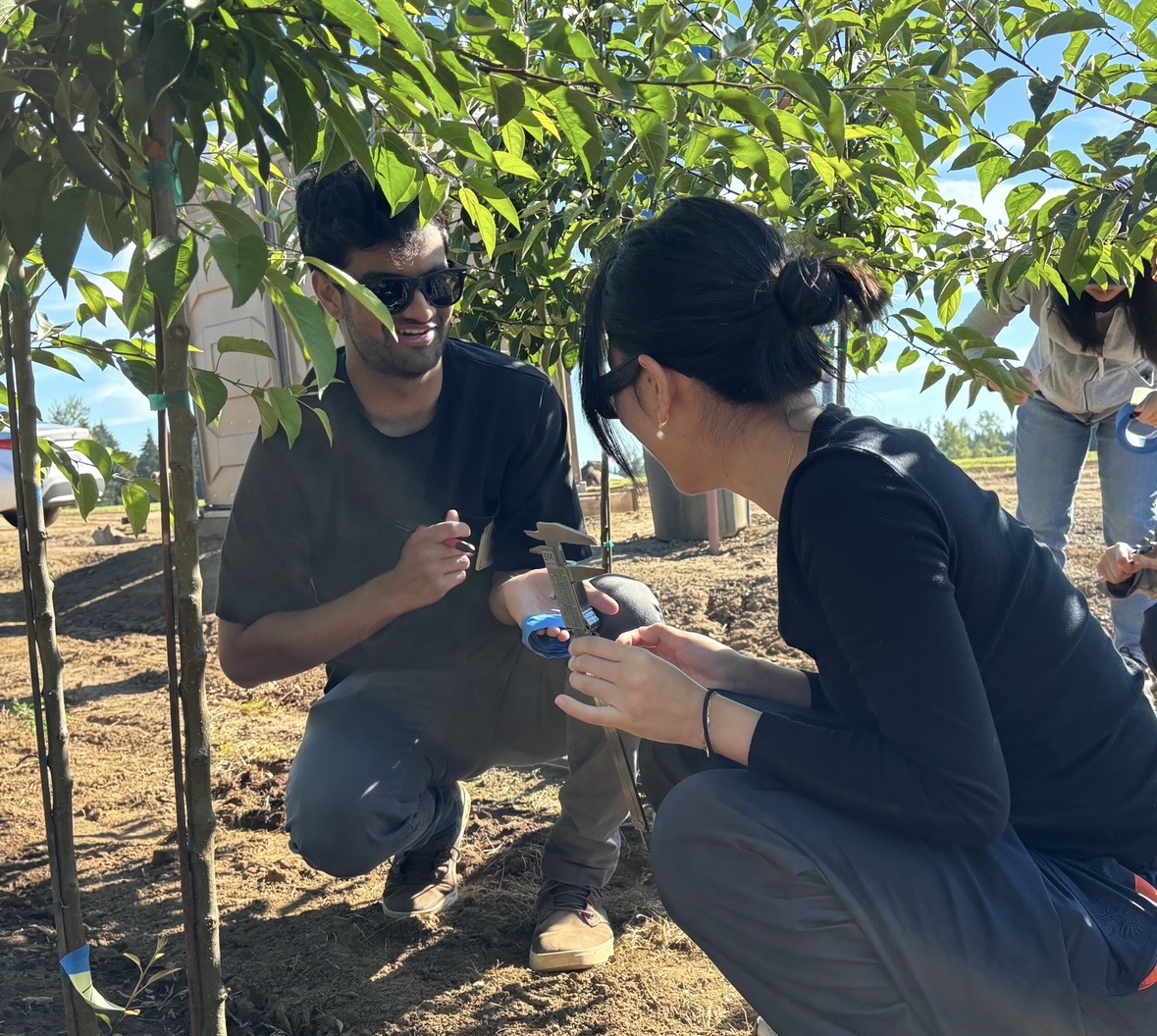
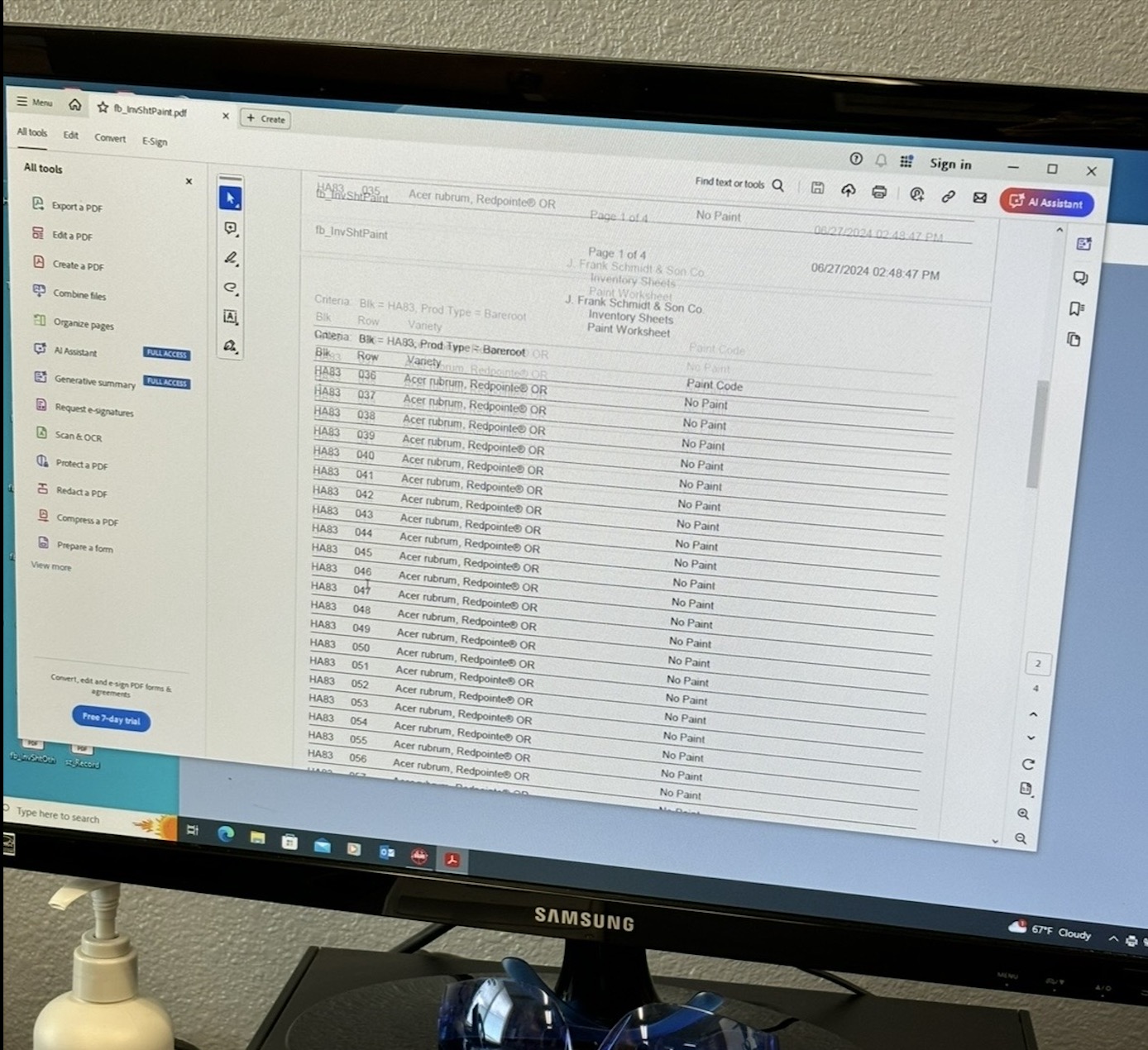
At J. Frank Schmidt & Son Co., one of the largest tree nurseries in the U.S., crews measured trees with calipers, recorded counts on tally sheets, and later re-entered the data into existing software.
2M
trees
3,000
acres
2
people
3
months
scope
Prototype to pilot-ready system
current system · June 2024
- Standalone sensor kit prototype integrating LiDAR, cameras, GPS, and IMU
- Scans 10–50 trees per second at 97% accuracy
- Controlled through developer laptops
target system · August 2024
- Deployable sensor kit ready for field use
- Interface that lets farmers and workers collect data themselves
- Collected data integrates into their current workflows
- Scalable to support eight pilot programs
deliverable 01 · deployment
A prototype farmers could actually use
I spent time on farms in Oregon watching how inventory was collected and how the resulting data moved through the organization. Instead of replacing the systems they already relied on, we designed around them.
insight
Farms are organized by farm → section → block → row, and tree varieties frequently change.
solution
Operators can note variety changes during collection and edit them afterwards.
insight
Sales relies on an existing ERP system. It is slow, but essential.
solution
CSV exports and inventory tables aggregated by variety.
insight
Sales teams need accurate count, height, and caliper data for forecasting.
solution
Table view with customizable columns.
insight
Farm managers care about patterns: irrigation, pests, damage.
solution
Interactive maps and filters by variety, block, row, height, and caliper.
result
Farmers could independently collect inventory data and integrate it into their existing workflow.
deliverable 02 · adoption
A system farmers could trust in the field
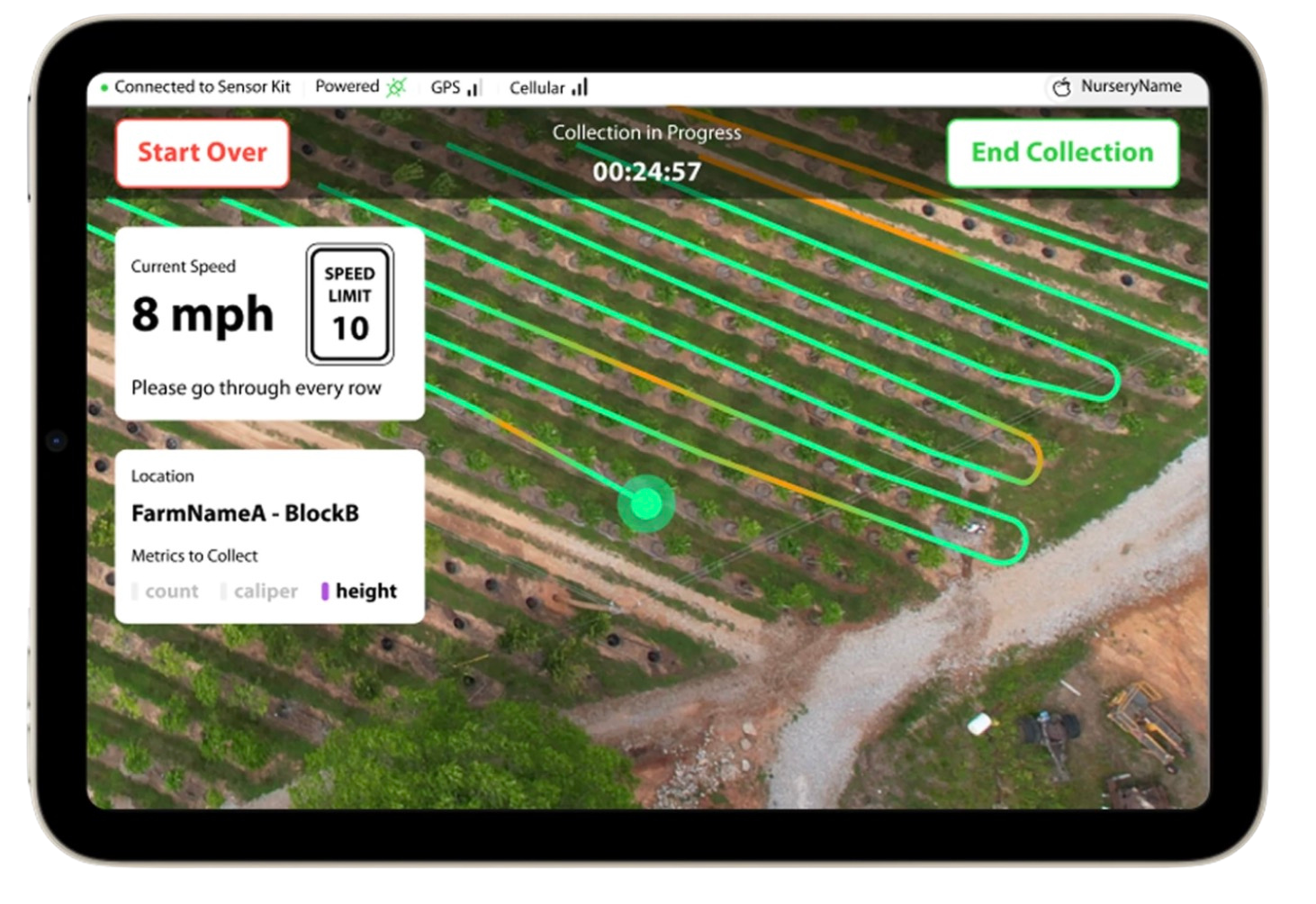
Operators work outdoors, wear gloves, and rarely stop the ATV to interact with software. They needed to know what the system was doing without opening developer tools or reading internal error codes.
insight
Failure is expensive. One mistake could waste an entire day of work.
solution
Visible system feedback through LEDs, tablet status, progress, battery, speed, and maps.
insight
Operators didn't know what the system was doing.
solution
Operator guide for the sensor kit in English and Spanish.
insight
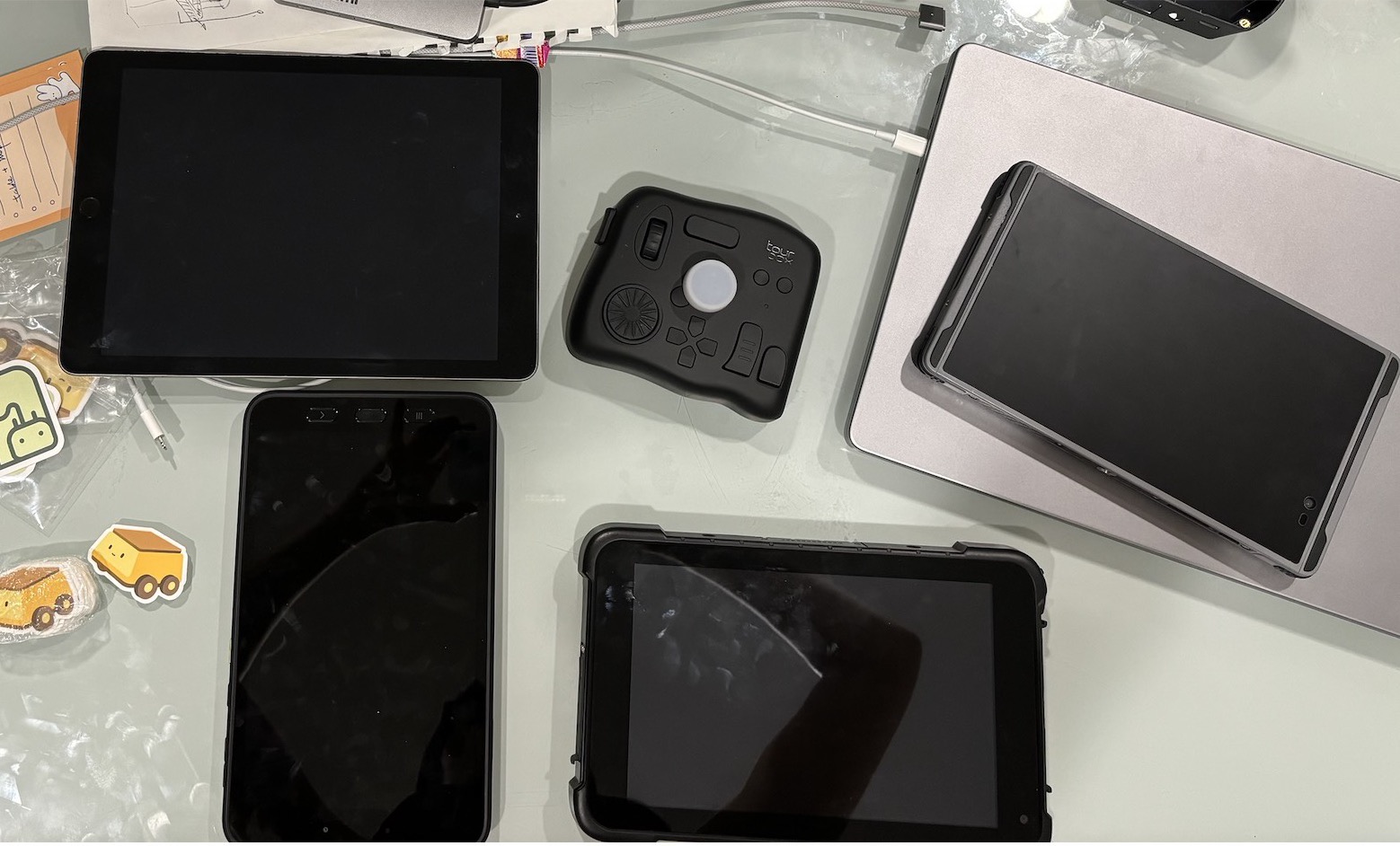
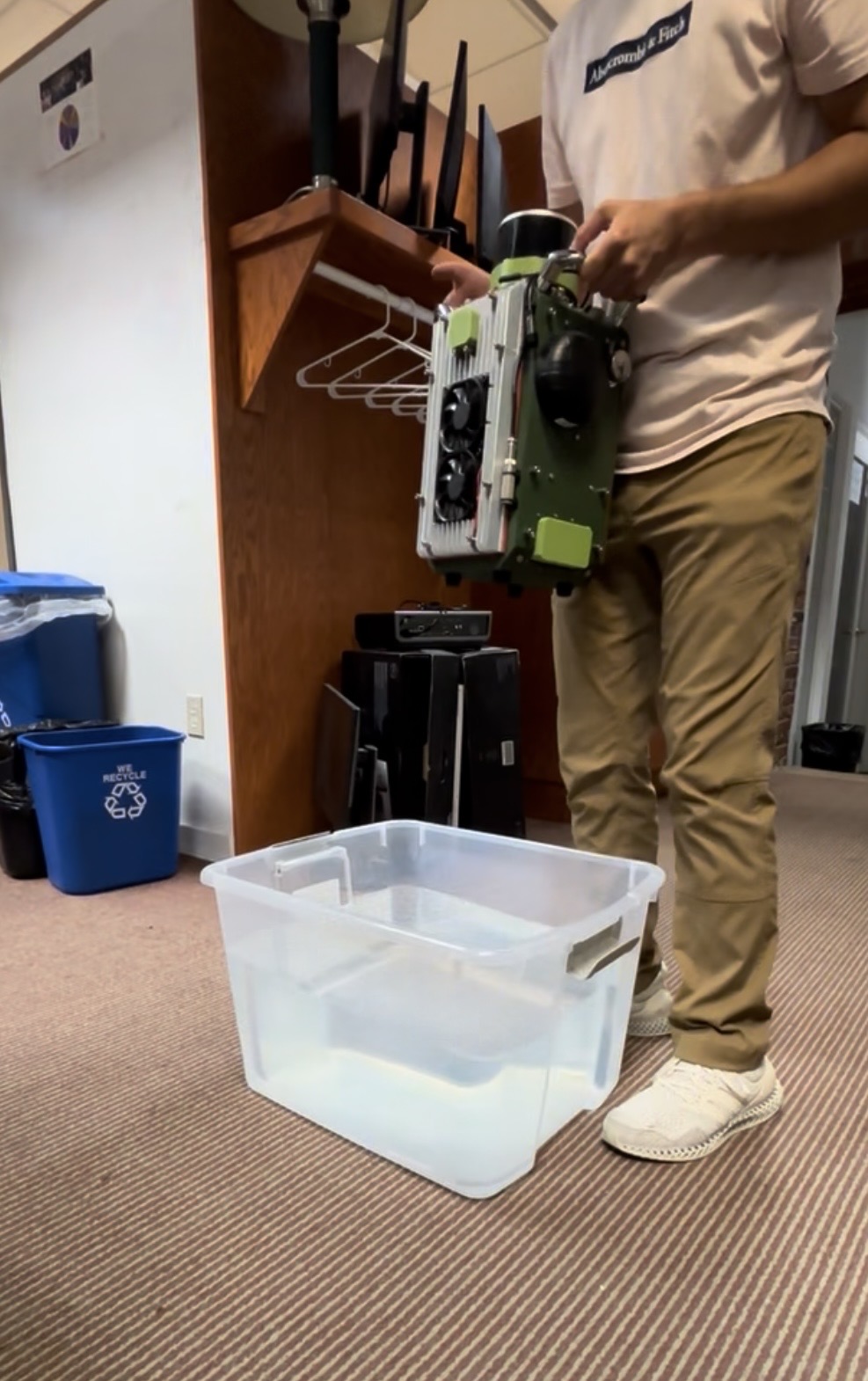
Hardware wasn't built for the field. Heat, dust, rain, and vibration were everyday realities.
solution
IP67 connectors, sunlight-tested tablets, rugged mounting, retractable Ethernet, and vibration-resistant wiring.
result
A sensor kit farmers could deploy independently during the Oregon field pilot.
the sensor kit
Four subsystems, one enclosure
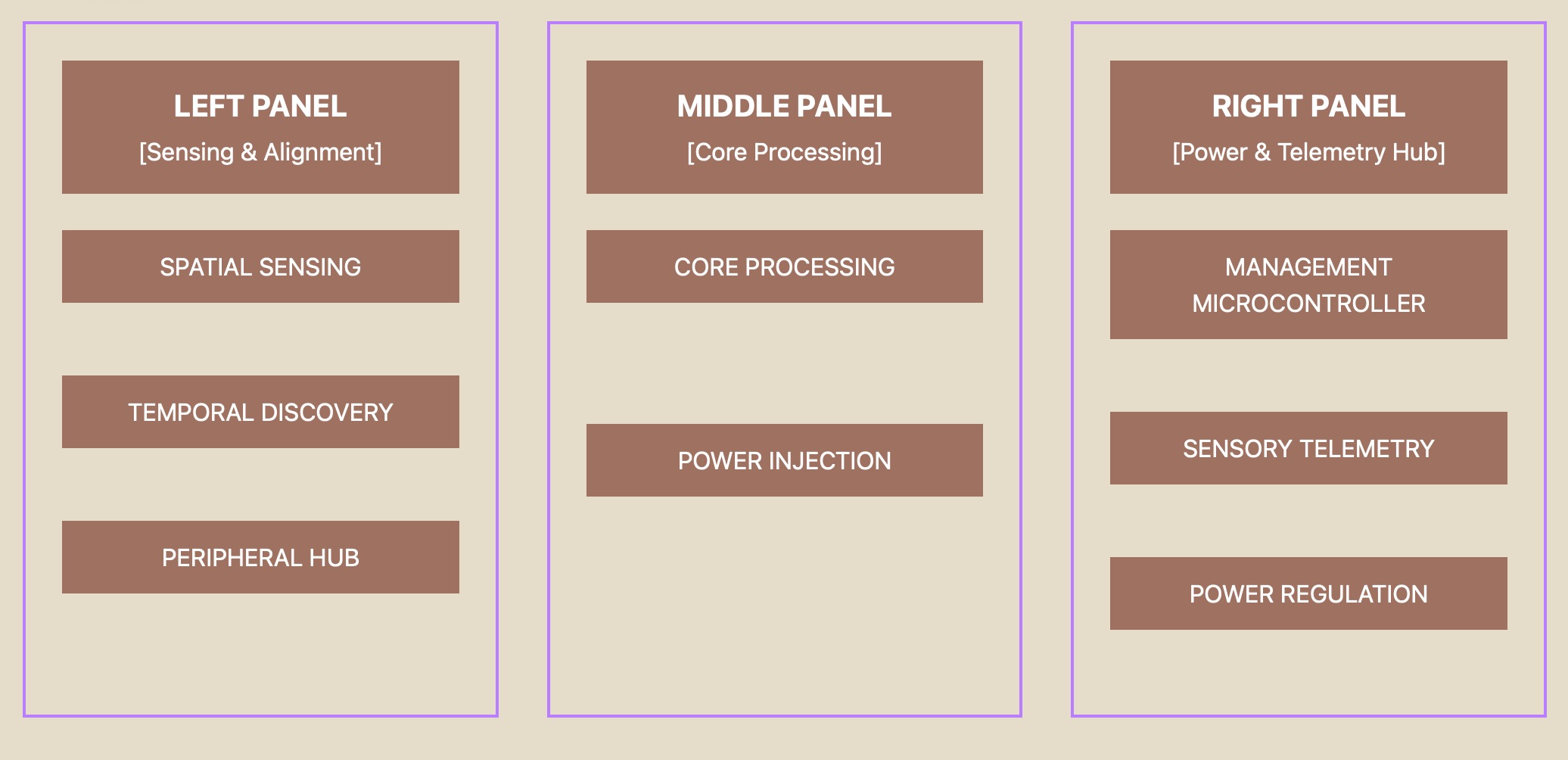
Sensing
LiDAR, cameras, GPS, and IMU.
Compute
Processes and records incoming sensor data.
Power
Battery management and power distribution.
Networking
Communication between internal components and the operator interface.
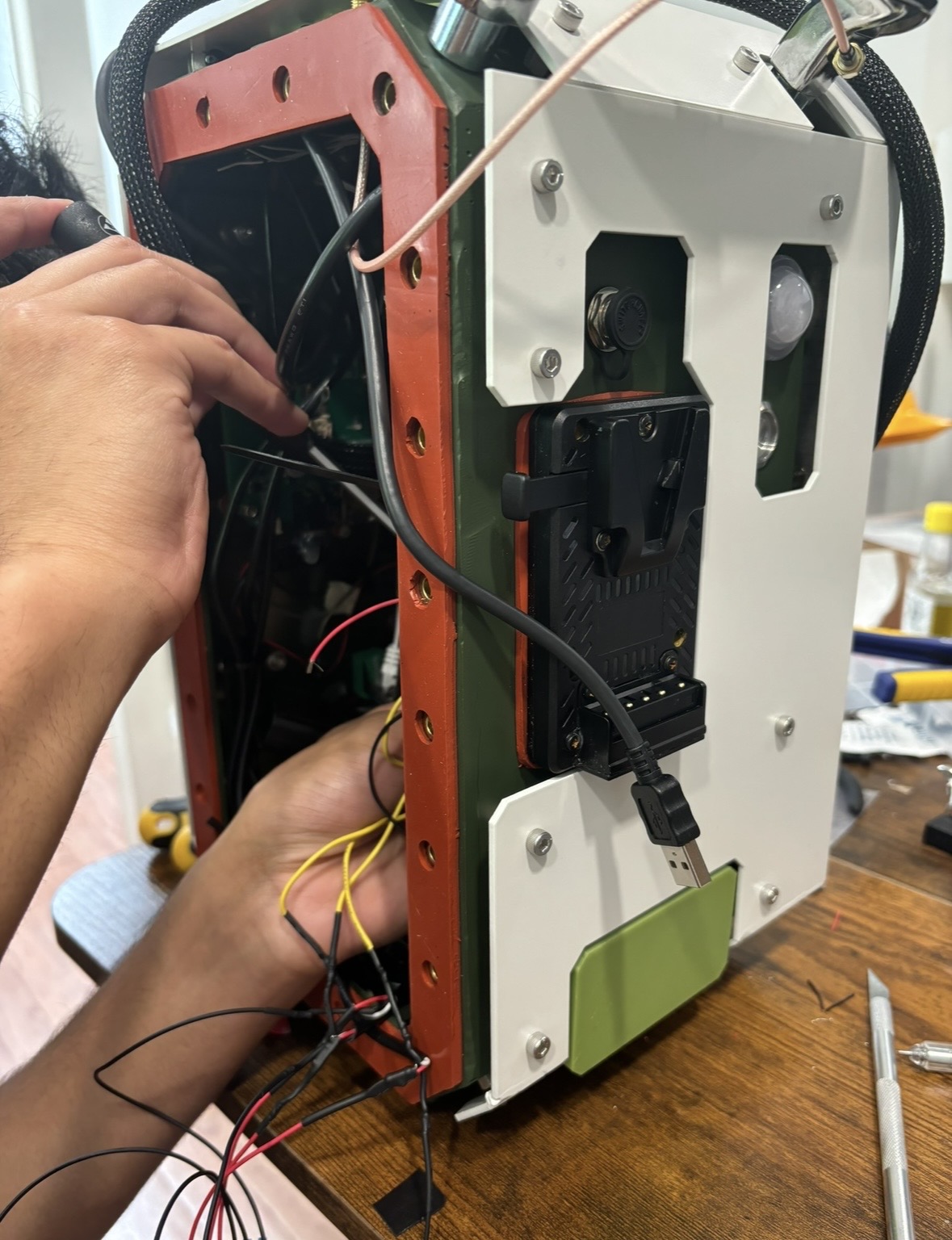
I reorganized the internal hardware around modular backplanes and fixed component positions, so a battery, sensor, or subsystem could be replaced in the field without rewiring the enclosure.
deliverable 03 · scaling
From one build to eight pilots
The largest scaling constraint was assembly. Instead of treating every sensor kit like a new prototype, the redesigned system followed a consistent build process another engineer could follow.
insight
Knowledge existed only in my head. Another engineer couldn't easily build the system.
solution
Documentation: wiring schematics, block diagrams, connector maps, build manuals, and BOMs.
insight
Building each unit took nearly two weeks.
solution
Backplanes that consolidate wiring and simplify assembly.
insight
Assembly required extensive manual wiring.
solution
Standardized connectors, pre-crimped cables, and repeatable assembly procedures.
result
Reduced estimated assembly time from roughly two weeks to three days.
lessons learned
Bring customers in earlier
Waiting too long to involve customers led us to make assumptions about their workflow and needs.
Involving customers in the design process built trust, ownership, and ultimately adoption.
"The biggest detractors were like the best… they don't want change. But if you could satisfy them, they were your biggest proponent out there telling everyone else."